


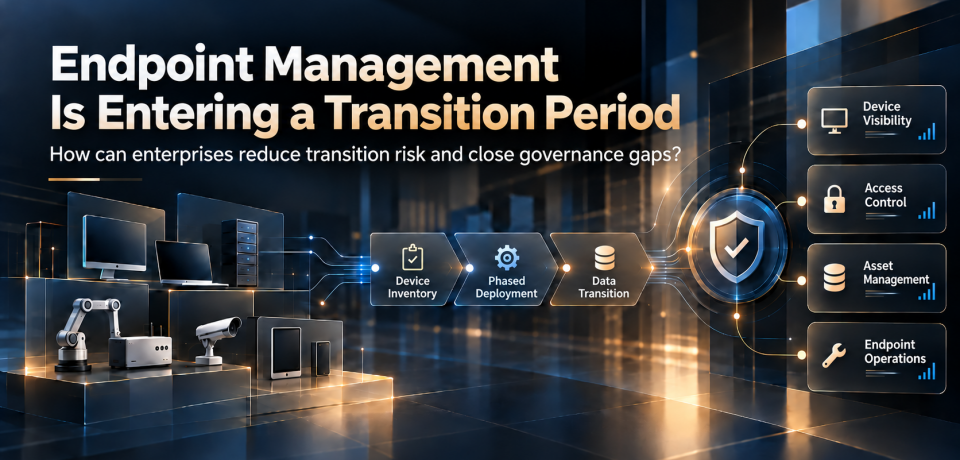
1. Replacing an Endpoint Management System: What Should Enterprises Confirm Before Making the Switch?
When enterprises begin reassessing an existing endpoint management system, the first priority is to determine whether the new system can take over the current management workload without disruption. Device inventory, software management, policy configuration, endpoint compliance, and day-to-day operations are usually embedded in established IT processes, so replacing the system will also affect existing workflows.
Before the migration, enterprises should document their current environment, including which devices must remain under management, which policies and data must be retained, and whether the new approach can support different environments such as IT, OT, and IoMT. Manufacturers face a wider range of device types and longer equipment lifecycles, making it especially important to minimize the impact on production operations during the transition.
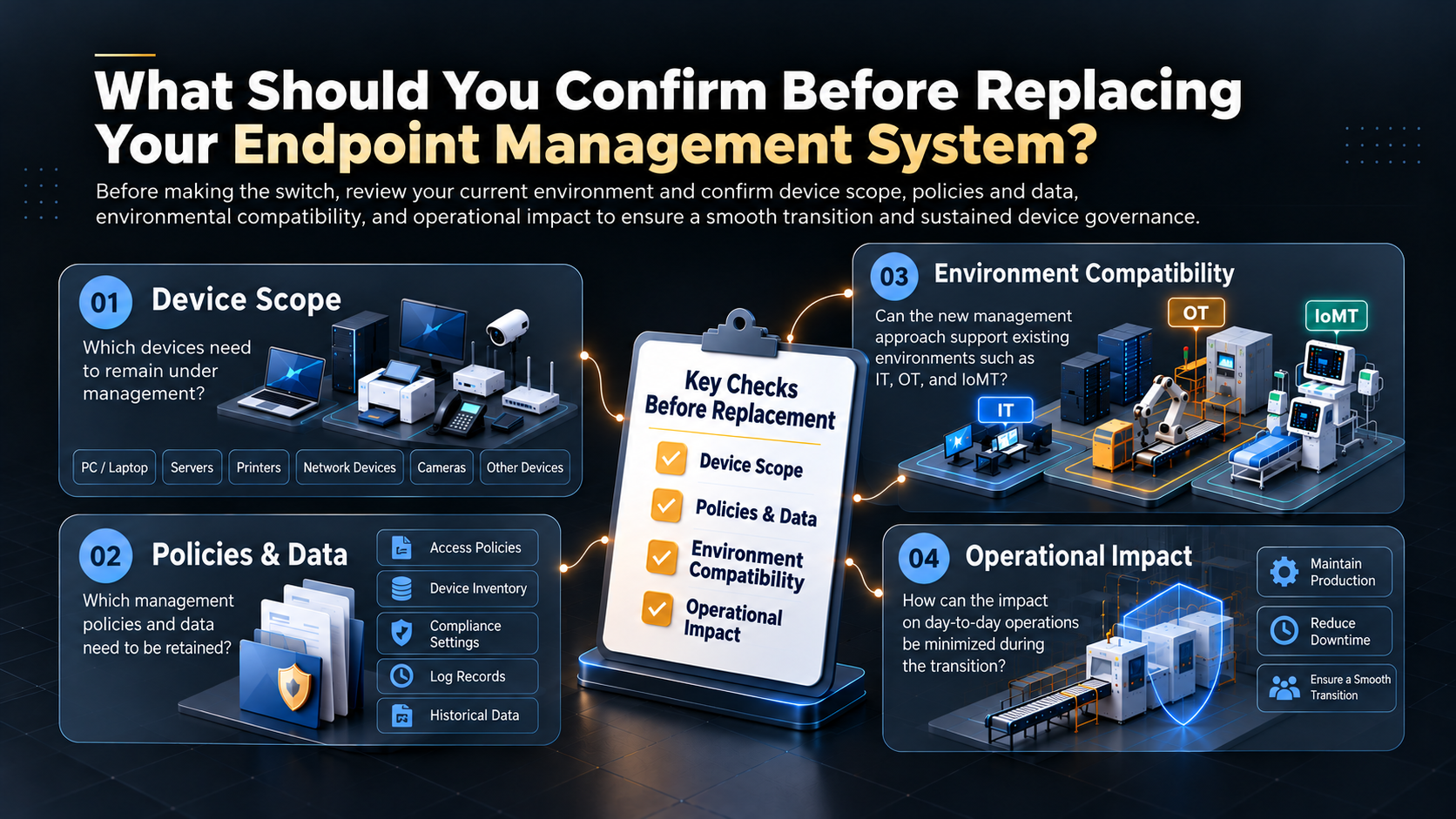
Key areas to review before replacing an endpoint management system. (AI-generated conceptual illustration; not an actual product interface or customer data.)
Instead of switching everything at once, enterprises can begin with a PoC involving representative devices, departments, or sites. This helps reduce concerns about the migration and allows the organization to verify device identification, asset data, software management, and operating workflows before deciding how broadly to deploy the new system.
2. Keeping the Existing System Also Creates Hidden Management Costs That Continue to Accumulate
It is understandable for enterprises to have concerns about replacing a system. However, if the existing endpoint management environment already suffers from incomplete device visibility, unsynchronized data, time-consuming policy maintenance, or difficulty managing OT and IoMT devices, continuing with the current approach means these management gaps will remain.
These costs are usually spread across day-to-day work rather than appearing all at once. IT teams may need to repeat manual inventories, compare data across systems, track down unmanaged devices, or introduce additional tools to address requirements the existing system cannot handle. Over time, the number of management interfaces grows, data becomes increasingly fragmented, and operational workloads rise. IT teams may end up spending substantial time organizing information instead of addressing higher-value governance work.
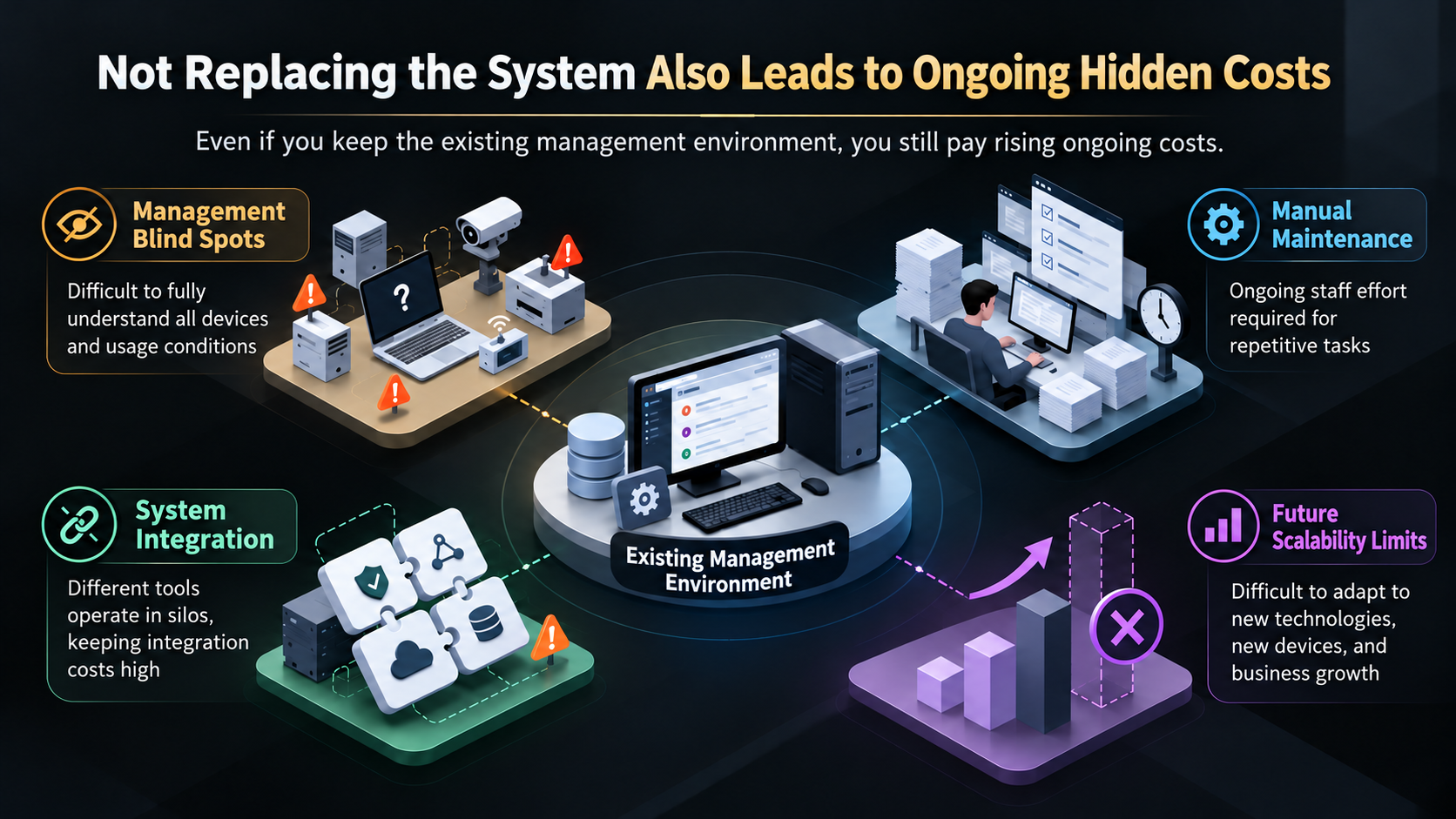
Hidden costs continue to accumulate when the existing system is retained. (AI-generated conceptual illustration; not an actual product interface or customer data.)
Enterprise management requirements are also changing. As AI, automation, PQC, and OT/IoMT security enter the scope of governance, the devices, permissions, and asset relationships that organizations must manage will become more complex. If existing tools lack sufficient device visibility, integration capabilities, or scalability, each new requirement may add another layer of management cost.
When deciding whether to replace a system, enterprises should also account for the cost of maintaining the status quo. If management gaps are already affecting efficiency, visibility, and future expansion, delaying change will create costs that continue to accumulate.
3. Five Areas to Evaluate When Reassessing Endpoint Management Tools
When selecting a new endpoint management tool, enterprises should begin with their day-to-day management scenarios and confirm whether the new system can reduce workloads, close existing gaps, and support future governance requirements. A capable endpoint management tool should be evaluated across the following five areas:
- Comprehensive device visibility: In addition to computers with agents installed, the scope should include IoT, OT, and IoMT devices that may not be suitable for agent deployment, preventing management from covering only a portion of connected endpoints.
- Information integration: Data on devices, users, IP/MAC addresses, software, patches, vulnerabilities, and configurations should be correlated. Cross-system data comparison should also be supported to reduce the time IT teams spend manually searching, organizing, and verifying information across different platforms.
- The ability to act after identifying an issue: A strong tool should go beyond inventory and reporting by supporting network blocking, software management, policy enforcement, remediation, and day-to-day operations, ensuring that identified issues can be addressed.
- Reduced operational workload: A new system should reduce manual inventories, repetitive maintenance, and cross-platform searches instead of becoming another tool that requires additional administration.
- Room for future expansion: As OT/IoMT, AI agents, and PQC progressively enter the scope of enterprise governance, device and asset information will provide an essential foundation for future management.
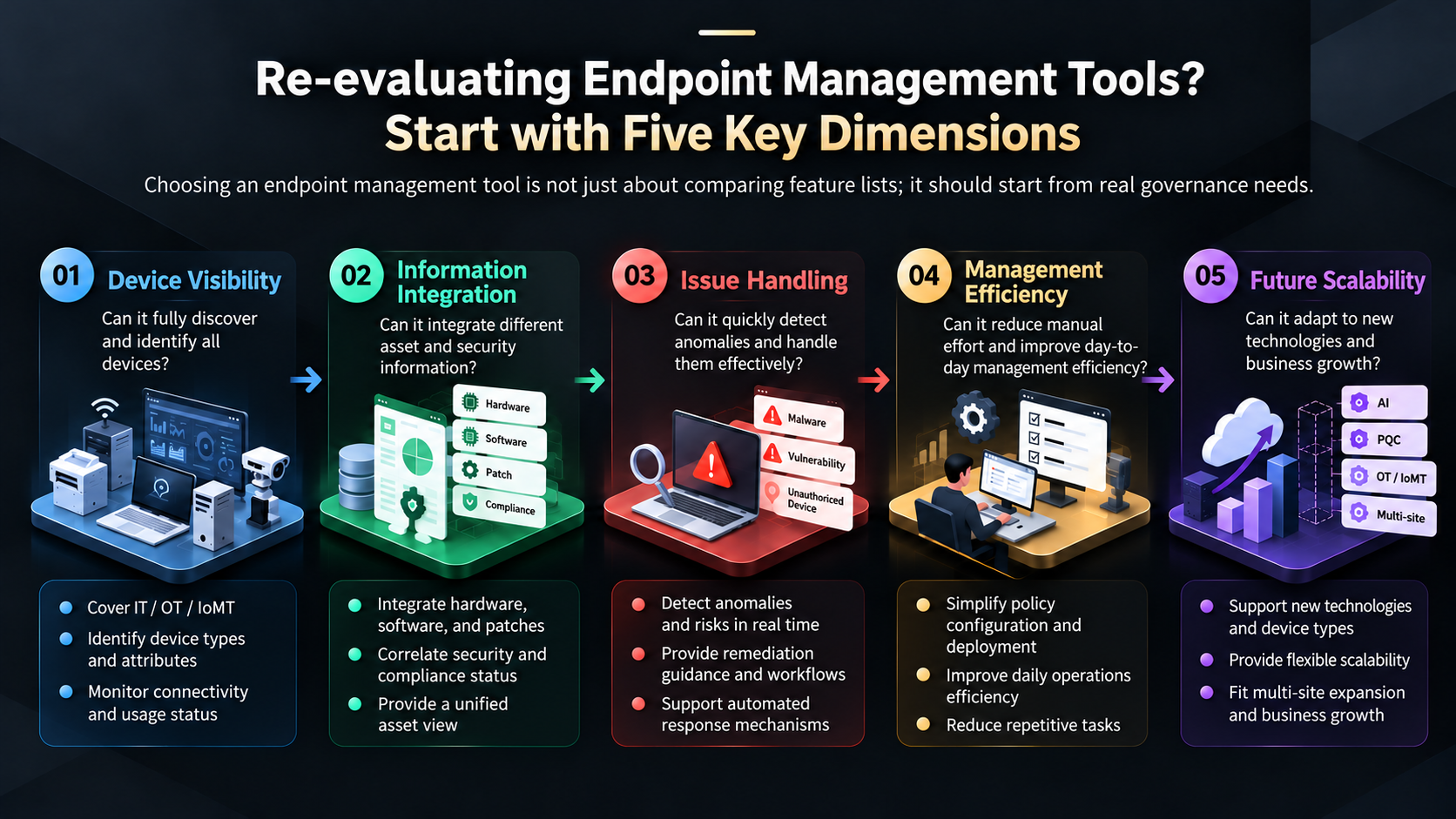
Five capabilities a comprehensive endpoint management tool should provide. (AI-generated conceptual illustration; not an actual product interface or customer data.)
When evaluating a new tool, enterprises can therefore ask whether it will reduce repetitive IT work, organize information clearly, and provide room to support new devices and governance requirements in the future.
4. UPAS NAC + ITAM: A Practical, Easy-to-Use Endpoint Management Solution
Based on the criteria above, UPAS NAC + ITAM directly addresses the capabilities expected of a strong endpoint management solution: comprehensive device visibility, integrated information, the ability to act after identifying an issue, more efficient day-to-day management, and room for future expansion.
UPAS NAC first helps enterprises identify which devices are connected, understand the relationship between devices and users, and determine whether connections comply with established access policies. IoT, OT, and IoMT devices that are not suitable for agent installation can first be brought into view through an agentless approach. ITAM can then provide deeper management for conventional computers and endpoints by continuously tracking hardware and software assets, software versions, patch status, vulnerabilities, configurations, and operational status.
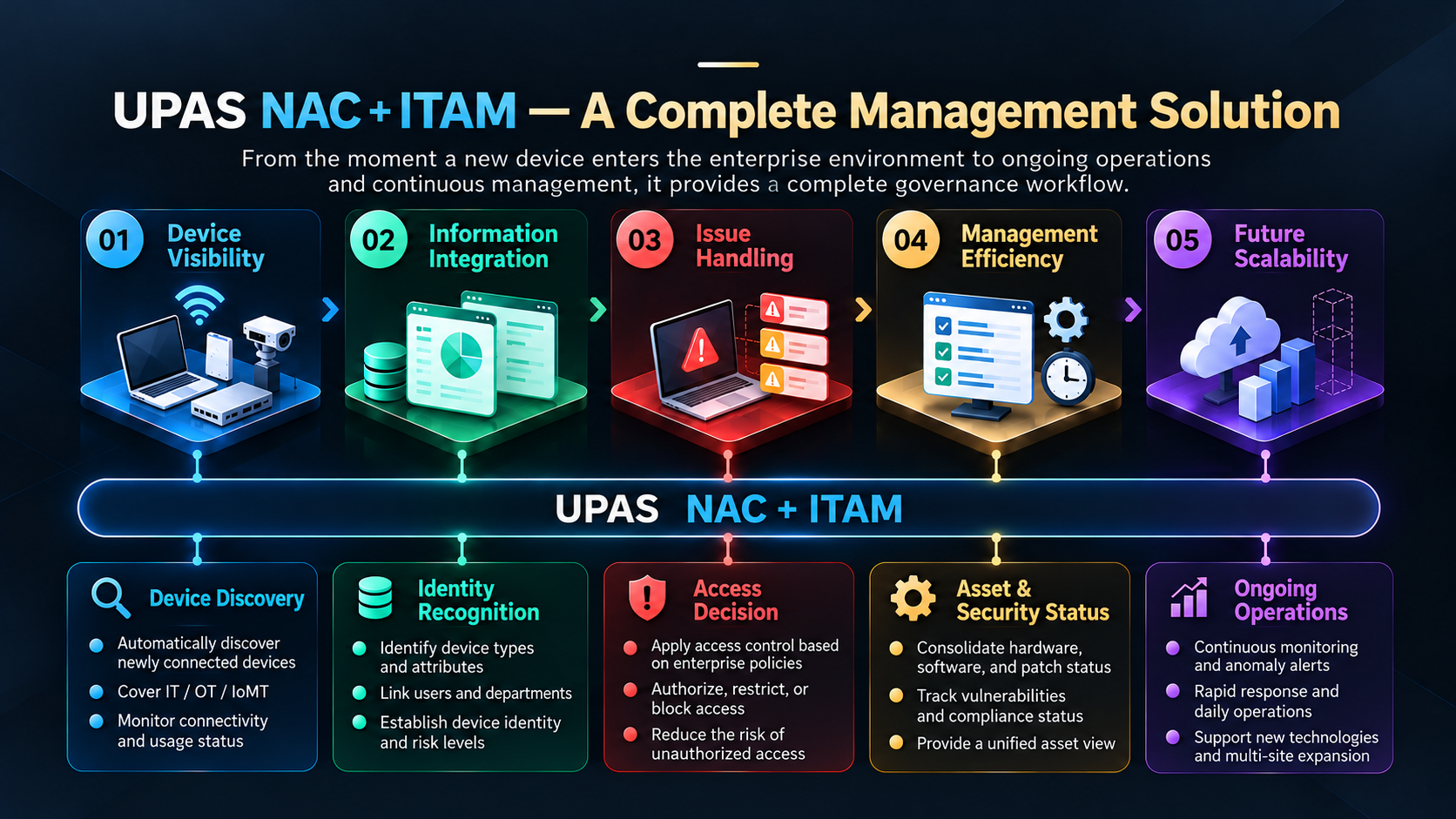
UPAS NAC + ITAM address every key requirement of a strong management solution. (AI-generated conceptual illustration; not an actual product interface or customer data.)
Beyond these five core capabilities, UPAS extends management into a broader range of day-to-day operations. It supports management across Windows, Linux, macOS, iOS, and Android; integrates device, software, account, AD, traffic, and connection information; and provides capabilities such as software deployment and removal, remote desktop access, USB and peripheral authorization, AD management, and mobile device management. This allows IT teams to address device-related issues continuously within a unified governance framework.
As new governance requirements involving AI agents, OT/IoMT, and PQC enter enterprise environments, endpoint management must evolve from a one-time inventory to continuous trust assessment. A device that complies with policy today may not remain secure tomorrow. Permissions, vulnerabilities, configurations, connections, and usage status can all change, so enterprises need to continuously verify whether each device still meets requirements and remains trustworthy.
UPAS meets the fundamental requirements of a strong endpoint management solution while embedding device governance into the workflows IT teams use every day. Through NAC + ITAM, enterprises can continuously track device identity, connections, assets, vulnerabilities, patches, configurations, and other information, then incorporate these changing conditions into subsequent governance and decision-making. This advances endpoint management from “being visible” to “being continuously verified” and establishes a foundation for broader trust governance across AI, PQC, OT, and IoMT.
5. Simplifying Endpoint Management Migration: UPAS Helps Enterprises Get Up and Running Quickly
Enterprises reassessing their endpoint management systems do not need to switch everything at once. UPAS specialists can help review the existing environment, identify the management capabilities and device scope that must be retained, and plan the migration around the enterprise’s actual requirements, reducing the impact on day-to-day operations.
The implementation can begin with a PoC involving representative devices, departments, or sites. Enterprises can verify device identification, asset information, software management, access control, and compatibility with existing workflows before moving to a phased deployment and gradually expanding the management scope. This approach also helps organizations with large device populations, complex multi-site environments, or a mix of IT, OT, and IoMT avoid the operational burden of an all-at-once replacement.
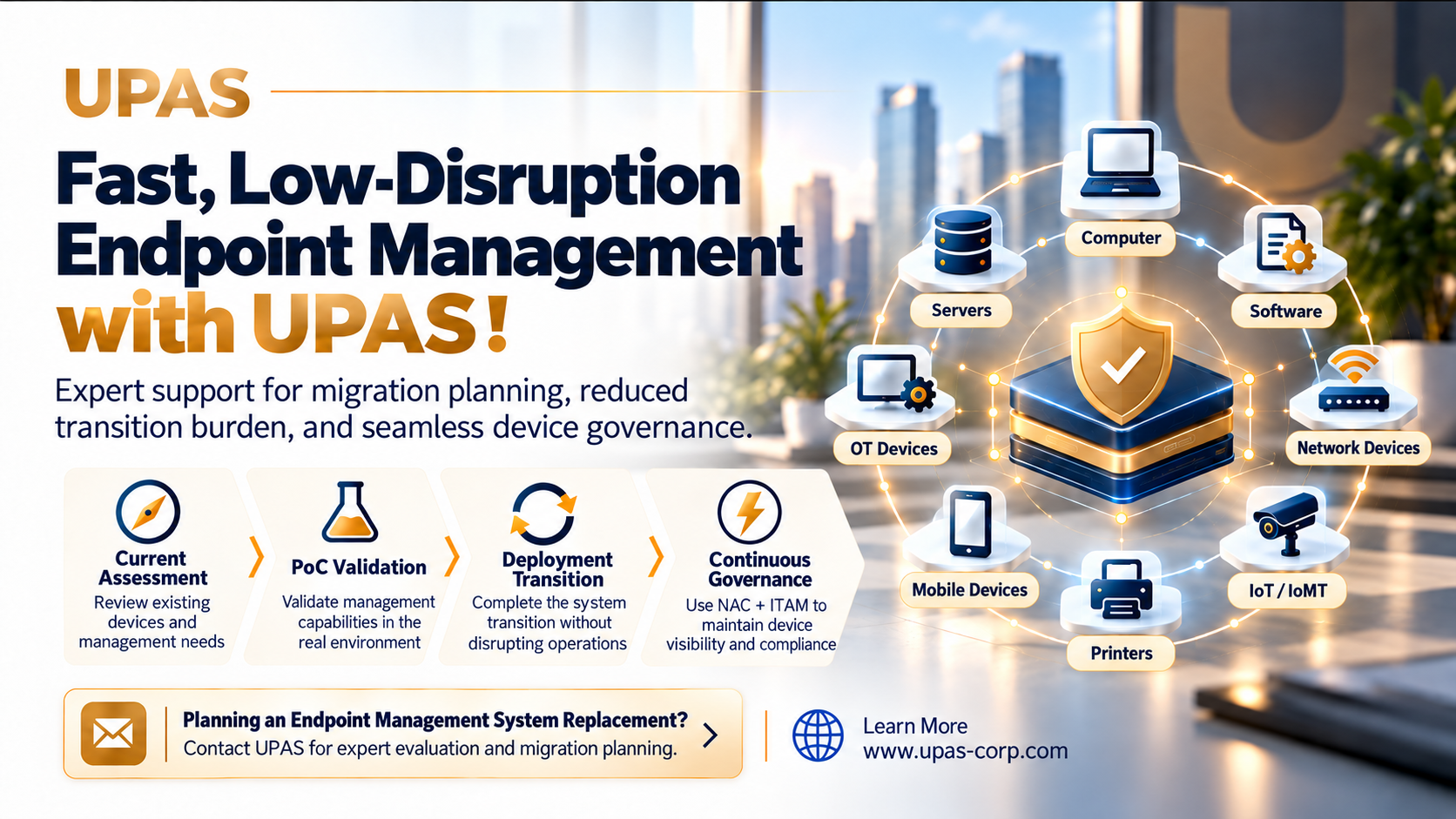
From assessing the current environment and defining requirements to PoC validation and phased migration, UPAS helps enterprises reduce endpoint management migration risk. (AI-generated conceptual illustration; not an actual product interface or customer data.)
From PoC validation and migration planning to phased deployment, dedicated specialists help enterprises break the transition into manageable stages. This reduces the burden of switching systems while progressively closing existing device management gaps. UPAS is designed to help IT teams complete real work and solve practical problems while balancing usability and overall cost-effectiveness, so that the capabilities introduced translate directly into greater day-to-day operational efficiency.
As new governance requirements involving AI, PQC, and OT/IoMT security continue to grow, a system refresh can also serve as an opportunity to restructure endpoint governance. After the migration is complete, enterprises will retain the flexibility needed for future expansion and continuous management.
Professional Consultation: https://www.upas-corp.com/request
Request an Enterprise Trial: https://www.upas-corp.com/apply
UPAS FACEBOOK ► https://www.facebook.com/upastaiwan
UPAS Official Website ► https://www.upas-corp.com
